V034 – EUCALYPTUS
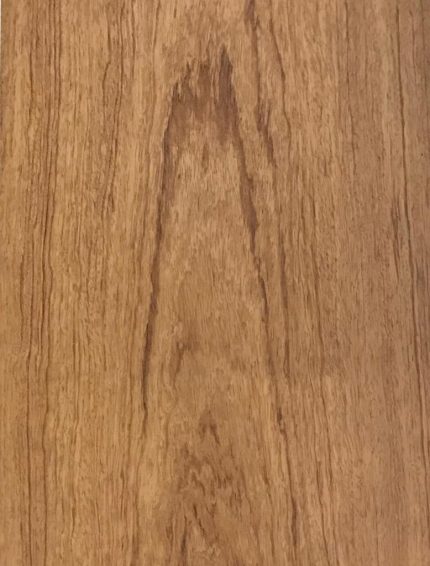
In its simple form – cf. Eucalyptus Pommele, Eucalyptus Riegel – it is rarely used as a front veneer, mostly as a side and interior veneer, because the wood is not very expressive.
In addition to veneer production, eucalyptus is used for ship and vehicle construction, for railway sleepers, and as plantation wood, mainly for paper production.
Categories: Natural Veneer, Wooden Veneer
Description
Related products
V009 – MAPLE CROWN
One of the most common furniture woods in the USA.
In recent years, hard maple has also gained a foothold in Europe as a furniture wood, especially as a "replacement wood" for pear, alder or maple in unsteamed white or muted pink tones.
Due to its abrasion resistance, it is also used as a hard-wearing parquet wood in gymnasiums, etc.
Turned as spools, shuttles, or billiard cues.
V014 – WALNUT QUARTER
Highly sought-after and considered high-quality furniture wood for interior design and high-end furniture construction.
Due to its high strength and elasticity, it is also suitable for chair and seating furniture production. Particularly used for gun stocks and aircraft propellers. Traditional wood for piano and grand piano construction.
V016 – ROSE WOOD CROWN
The heartwood is yellowish, irregularly veined with reddish veins, striped or spotted, and fades when exposed to light and air, but is nevertheless very decorative.
Due to the small diameter, it is often flawed and has cracks in the heart, so it is only suitable for small furniture and inlaid furniture, and rarely for interior design.
V019 – BUBINGA
V023 – WALNUT BURL
V025 – BIRCH VENEER
V030 – MAPLE BURL
V033 – LACEWOOD
Has a very conspicuous flecking that gives this wood its namesake.
The wood itself is a reddish brown with grey or light brown rays, which result in a lace pattern when quartersawn.
Like other woods that exhibit the strongest figure in quartersawn pieces, (such as Sycamore),
Lacewood has the most pronounced figure and displays the largest flecks when perfectly quartersawn;
this is due to the wood’s wide medullary rays, whose layout can be seen the clearest when looking at the end grain.