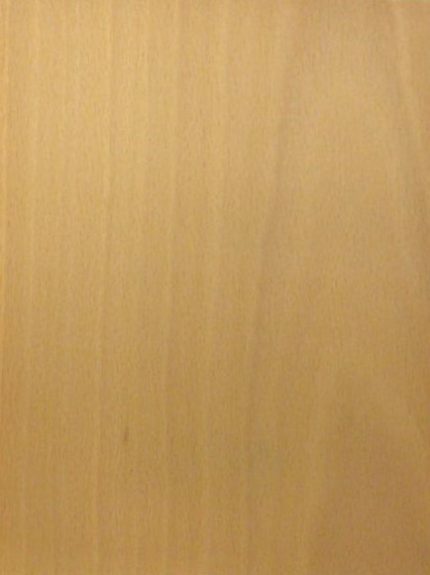
V045 – ROUGH CUT VENEER QUARTER

Due to the strong mixing of the individual species, the color spectrum is broad, from light yellow to dark brown. Variations to pink are also possible. So-called minerals, dark colorations that appear as clearly defined spots on the surface, are common. In wet wood, blueing is possible due to contact with metal.

V046 – AFROMOSIA

For exterior surfaces, DD varnishes or open-pored glazes are recommended. NC varnishes are recommended for interior areas. A surface treatment should be carried out to prevent reaction stains caused by iron.

V047 – OAK BURL

The main quality criterion of burl oak is the ingrown bark, which can be found in almost every tree. The less ingrown bark, the higher the quality of the veneer, as significantly less time is required for processing. Trunks without ingrown bark are extremely rare.

V048 – CEDAR

Cedars are used in furniture making and were formerly also a popular wood for shipbuilding. Its characteristics are light reddish wood that exudes a characteristic aromatic smell. Mechanically, cedar can be easily worked by hand and by machine. Planed surfaces have a slight sheen, but the tools quickly become blunt due to the resin content.

V049 – ASH BURL VENEER

Completely healthy, large, and fully-grained trunks are very rare. Often one finds either black knots in the burl eyes or a more cluster-like grain, ie burl fields are distributed over the surface and connected by wild structures.

V051 – FRAMIRE VENEER

Framire Veneer, also known as Idigbo, boasts a light yellow-brown to medium brown color that can darken slightly with age. Its grain is typically straight to slightly interlocked, and the texture is moderately coarse. Framire is easy to work with, sands smoothly, and takes finishes well, making it a versatile option for various applications.

V052 – MAKORE VENEER

Used as veneer wood, sliced ​​wood for face veneer, furniture, paneling, and parquet. Only Douka bars are used as sliced ​​wood, plain Douka is not desired and is used at most as peeled wood for veneer panels. Douka is to be regarded as a replacement and replacement wood type for Makore.

V053 – KNOTTY PINE

The heartwood is light reddish when fresh, but darkens quickly to the color of the Scots pine when exposed to light and air. It is characterized by the numerous, firmly grown branches that do not break when cut. This makes this wood extremely decorative for interior design.

V054 – KNOTTY OAK

Oaks that have developed many pin knots are used, but should still be healthy and closed. Knotty oak veneers are used to a small extent in series furniture production, but mostly in interior design. Otherwise, see European oak. Mechanically, Despite its hardness, oak can be worked well with all tools. Planed surfaces are very smooth. Profiles and turning work can be carried out with good results.

V058 – MYRTLE BURL

Because myrtle has a dark core, a distinction must be made between veneers without a core, which are yellowish, and those with a core, which are dark brown. This is why myrtle burl is often stained so that both types can be used. The aromatic smell of the wood is striking.

V062 – OLIVE-ASH

used as decorative veneer for interior design. Extremely decorative; characterized by an interplay between dark and white annual ring zones, in contrast to the brown ash, which lacks the white annual ring zones.

V066 – WHITE BEECH

Used as veneer wood, large dimensions compared to other European woods (60 cm diameter and more), furniture and parquet wood, chipboard, excellent bending wood (seating furniture), well suited for workbenches, good construction wood. One of the most common woods in Europe is produced as a veneer in steamed, white, and old white. Since the mid-1990s, beech has been a distinctly fashionable wood in the veneer and solid wood sector.